
Mililani Homes for Sale
Explore current Mililani homes and get clear guidance on Mililani Town, Mililani Mauka, Launani Valley, and Waipiʻo Acres / Waikalani / Melemanu so you can narrow your search around the home, commute, and everyday priorities that matter to you.
Start Your Mililani Home Search
Tell me what you're looking for, where you are in the process, and what matters most in your next move. I'll help you narrow the right Mililani options and next steps.
Current Mililani Homes for Sale
Browse current Mililani homes through my live search. You can explore freely, then save favorites or reach out when you're ready for help narrowing the right options.
Mililani Is More Than Just One Neighborhood
If you have ever wondered where Mililani Town ends, what "Mauka" actually means, where Launani Valley fits, or why a home with a Mililani address can be listed under Waipiʻo Acres, you are not alone. Understanding those differences makes it much easier to narrow your home search.
| Area | In one line |
|---|---|
| Mililani Town | Earlier-developed neighborhoods, and where most shopping and services sit |
| Mililani Mauka | Later-developed neighborhoods across H-2, with more interior residential pockets |
| Launani Valley | A separate valley with its own association and its own school assignment |
| Waipiʻo Acres / Waikalani / Melemanu | Condo communities and Waipiʻo Acres homes outside the Mililani Town Association |

Mililani Town
Mililani Town is the earlier-developed part of the community and where you'll find most of Mililani's everyday shopping and services. Housing ranges from condos and townhomes to single-family homes, so I always encourage Buyers to compare the specific neighborhood and property rather than think of Town as one single housing type.
Mililani Mauka
Mauka means "toward the mountain," and Mililani Mauka sits across H-2 from Mililani Town. It developed later, and depending on where a home sits within Mauka, I want Buyers to pay attention not just to the house but also to how deep into the community they'll be driving every day. Some of the farther-back pockets are more tucked into residential streets and see less through traffic than areas closer to the main connectors.
Launani Valley
Launani Valley is its own distinct Mililani pocket, and it feels different from both Town and Mauka. The valley includes several condo communities along with a smaller pocket of single-family homes, plus park and recreation space. Two things change when you live here, and they catch Buyers off guard. Launani Valley has its own community association rather than the Mililani Town Association, and homes here are assigned to a different set of schools than Mililani Town and Mililani Mauka. I cover both of those further down the page.
Waipiʻo Acres / Waikalani / Melemanu
This nearby pocket includes several condo communities along with single-family homes in Waipiʻo Acres. The condo communities are not all in one continuous cluster. Melemanu sits on the Kamehameha Highway side, while Waikalani Woodlands and Evergreen Terrace are reached from the Wikao Street side. The Waikalani Drive segments do not connect, so how you get in and out depends on which side of the area the property is on.
Some of the oldest condo communities here actually predate Mililani Town. Waipiolani and Waipio Gardens date to the 1960s, before Mililani Town homes went to market in 1968. Melemanu Woodlands was developed separately in the early 1970s, and Waikalani Woodlands followed in 1976. That history helps explain something Buyers still see today: these communities grew beside Mililani, but they were not developed as part of Mililani Town.
On listings, you'll commonly see Waikalani Woodlands, Evergreen Terrace, and the Melemanu projects grouped under the MLS neighborhood label "Waipio Acres/Waikalani Woodlands," even when the mailing address says Mililani. These communities are outside the Mililani Town Association. The condo projects have their own association structures and documents, while single-family homes in Waipiʻo Acres need to be checked property by property.
What Types of Homes Will You Find in Mililani?
One reason Buyers look at Mililani is the range of homes you can find here. Depending on the part of Mililani, you may see everything from condos and townhomes to single-family homes with different layouts, lot sizes, ages, and surroundings.
Condos
Mililani has condo options in several different pockets, including Launani Valley, Waikalani and Melemanu, and parts of Mililani Town. They can be a practical way to get into the Mililani market with less exterior maintenance, but I want Buyers to look closely at the specific association, monthly costs, parking, pet rules, and what those fees actually cover.
Townhomes
Mililani has a number of townhome communities, but they are not all structured the same way. Before you compare two homes only by price or square footage, I want you to understand the association costs, maintenance responsibilities, parking, and legal setup for each one.
Single-Family Homes
Mililani's single-family homes can vary quite a bit in age, layout, lot size, renovations, and condition. I help Buyers compare the things that matter beyond bedrooms and bathrooms, including maintenance, cooling, association obligations, and how the location works for everyday life.
Understanding Mililani Association Fees
Association costs in Mililani are not always as simple as one payment. Depending on the property, you may have a broader community association, a separate condominium or project association, or both. The important thing is to look at the specific property rather than assume based on how the home looks.
The Mililani Town Association
The Mililani Town Association, or MTA, covers Mililani Town and Mililani Mauka. MTA reports 15,829 homes across more than 3,500 acres and operates seven recreation centers. MTA collects a quarterly assessment and publishes the current amount on its own site.
MTA also enforces design standards. Exterior work such as roofing, paint, and other visible improvements can require Design Committee approval, and some complexes require approval from a sub-association as well. If you are planning changes to a home after you buy it, that is worth understanding before you write the offer rather than after.
When we get to a specific property, I'll pull the current figures and the governing documents so you're working from what is actually true for that home on that day.
Launani Valley Is Different
Launani Valley is not part of the Mililani Town Association. It has its own master association, which means its own documents, its own assessment, and its own rules. MTA amenities and MTA rules do not automatically apply to a Launani Valley property.
There is a second layer worth understanding. Many Launani Valley properties also sit within a separate condominium or project association beneath the master association. When that applies, you may be reviewing two sets of governing documents, two sets of fees, and two sets of responsibilities rather than one.
The master association also owns and maintains the open land surrounding the valley's neighborhoods, which is a meaningful responsibility. When I'm reviewing a Launani Valley property with a Buyer, I want to know what the master association maintains, what its reserves look like, and what its assessment history has been, not just what the monthly number is today.
This is exactly the kind of thing that does not show up in a listing photo, and it is one of the first things I check when a Buyer is comparing a Launani Valley home against one in Town or Mauka.
Waipiʻo Acres / Waikalani / Melemanu
This area is outside the Mililani Town Association as well, so MTA membership and MTA recreation privileges do not automatically come with a home here. It is also separate from the Launani Valley master association, even where the two sit side by side.
The condo communities here are separately registered projects with property-specific association structures, documents, and fees. Waikalani Woodlands, Evergreen Terrace, and the different Melemanu projects do not all share one setup, and single-family homes in Waipiʻo Acres can work differently again. That is why I look at the specific property before you compare it against a home in Town, Mauka, or Launani Valley.
Mililani Commute Times at a Glance
I think we've all heard one of the most repeated phrases in real estate: location, location, location. One of Mililani's biggest practical advantages is its Central Oʻahu position. The ranges below come from years of firsthand driving on these routes and from working with Military Families assigned across the island. Use them as a strong planning reference, then adjust from that baseline depending on where you may be living within Mililani Town, Mililani Mauka, Launani Valley, or Waipiʻo Acres / Waikalani / Melemanu, your report time, how far your home sits from the highway, gate traffic, construction, or an unusual traffic day. If you're already on island, test your actual route during the hours you would normally travel.
| Work or Duty Location | Experienced Baseline Range | Main Consideration |
|---|---|---|
| Wheeler Army Airfield | 8 to 10 minutes | Which gate you use, and where in Mililani you start |
| Schofield Barracks | 10 to 15 minutes | Closer to 10 from the Tech Park side, closer to 15 from Mililani Town |
| NCTAMS | 12 to 15 minutes | Central Oʻahu access |
| Joint Base Pearl Harbor-Hickam | 15 to 20 minutes | H-2 to H-1 merge is where it changes |
| Tripler Army Medical Center | 18 to 20 minutes | H-1 and Moanalua conditions |
| Camp Smith | 20 to 22 minutes | H-1 and Moanalua conditions |
| Fort Shafter | 20 to 23 minutes | Town-bound H-1 congestion |
| MCBH Kāneʻohe | 32 to 35 minutes | Cross-island route |
These are firsthand experience ranges, not guaranteed drive times. Your actual commute depends on your route, your gate, your report time, and the day.
Why I won't give you a rush hour number
A single rush hour number can be misleading, and here's why.
Two homes in Mililani can be ten minutes apart before anyone reaches the highway. If you're a block off the main connector, you're on H-2 almost immediately. If you're deep in Mauka or down in Launani Valley, you're working through neighborhood stoplights first, and that alone can add ten or twelve minutes before your commute really starts.
Then there's the H-2 to H-1 merge. On a bad morning, heading toward town, that stretch can add twenty minutes. It can also add forty. It depends on the day, the hour, an incident, construction, or nothing you can see at all.
So one rush hour number for all of Mililani would not give you a reliable picture. What I can tell you is what these drives take when the road is clear, which is the honest baseline, and then help you think about where a specific home sits relative to the highway. That second part is the one that actually changes your morning, and it's a question about the property, not about Mililani.
If you're already on island, drive the route from the actual house at the hour you would actually leave. That is the only number that matters.
Mililani Schools at a Glance
School assignment in Hawaiʻi is handled by the state Department of Education and depends on your specific street address, so always verify the assigned schools for any home you are considering. The one thing worth knowing up front is that Mililani does not have a single answer.
Mililani Town and Mililani Mauka
Addresses in Mililani Town and Mililani Mauka are assigned within the Mililani complex. That complex includes Mililani High School for grades 9 through 12, Mililani Middle School for grades 6 through 8, and five elementary schools: Kīpapa, Mililani Uka, Mililani Waena, Mililani Mauka, and Mililani ʻIke.
Launani Valley
Launani Valley works differently. Addresses in the valley are assigned to a different complex: Wheeler Elementary for grades K through 5, Wheeler Middle for grades 6 through 8, and Leilehua High School in Wahiawā for grades 9 through 12.
Wheeler Elementary and Wheeler Middle are both located on Wheeler Army Airfield. Leilehua High School is in Wahiawā town.
If schools matter to your decision, this is one of the clearest practical differences between Launani Valley and the rest of Mililani, and it is worth confirming directly with the Department of Education for the specific address you are considering.
For homes in Waipiʻo Acres / Waikalani / Melemanu, check the assignment for the specific address. Wheeler Elementary lists Waikalani Woodlands among the communities its students come from, but I would not assume one set of schools for the whole area.
What Daily Life Looks Like in Mililani
Mililani has the kind of everyday infrastructure that lets many residents handle most routine errands close to home. Shopping, recreation, fitness, dining, medical care, and community services are spread across the broader Mililani area, but where you live within Mililani makes a real difference in how close those conveniences feel.
Shopping and Errands
Mililani Town has the largest concentration of everyday shopping and services. Groceries, dining, fitness, and routine errands are generally easiest to handle from this side of the community.
Mililani Mauka has some conveniences of its own, but you may still find yourself coming back toward Mililani Town for certain errands.
Launani Valley is different. It is primarily residential, and routine errands mean heading out toward Mililani Town, Wahiawā, or another nearby commercial area.
Waipiʻo Acres / Waikalani / Melemanu is primarily residential as well, so errands usually mean driving toward Mililani Town or Wahiawā, depending on which side of the area you are on.
Recreation and Fitness
Mililani has parks, recreation centers, pools, sports facilities, and other community amenities spread throughout the area. The Mililani Town Association operates seven recreation centers for its member households, which covers Mililani Town and Mililani Mauka. Launani Valley is served by its own association instead, and Waipiʻo Acres / Waikalani / Melemanu sits outside MTA as well, so MTA recreation privileges do not automatically come with a home in either area.
Golf is close by, too. Mililani Golf Club, a public 18-hole course, sits right in Mililani Town, and Leilehua Golf Course, run by the Army between Wheeler and Schofield, is next to Launani Valley and open to civilian players as well. Hawaii Country Club in Wahiawā and the Royal Kunia and Waikele courses to the south are a short drive away.
What is actually convenient depends on whether you are in Town, Mauka, Launani Valley, or Waipiʻo Acres / Waikalani / Melemanu, so I like to look at the specific home location rather than simply say Mililani has everything nearby.
Medical and Urgent Care
Straub Benioff opened its Mililani Clinic and Urgent Care at Town Center of Mililani in 2025, giving the community another option for outpatient and urgent care. It is not an emergency department, so emergency care still means traveling outside the community.
Where you live within the broader Mililani area changes how convenient everyday appointments feel, so I look at the specific property location rather than treating every address in the Mililani area the same.
Weather and Elevation
Mililani does not feel exactly the same from one pocket to another. Elevation, rain, sun exposure, airflow, and how far you sit toward the mountain all affect how a particular home feels.
Here is the practical version. Do not assume that because Mililani runs cooler than the Leeward lowlands, you won't care about air conditioning. I have been in plenty of Mililani homes without it, and comfort varies enormously from one house to the next. Walk the home, look at the ventilation and sun exposure, find out what cooling equipment it actually has, and pay attention to how it feels at the time of day you would normally be home.
When It Makes Sense to Compare Other Oʻahu Communities
The right community is not just the one you liked on paper. Sometimes you start with Mililani and find that another area has more of the housing, space, newer construction, or everyday convenience you're actually after. If that happens, I'll help you compare instead of forcing the fit.
Need a Different Mix of Homes?
Sometimes it is simply about what is available when you are ready to buy. Depending on the size, layout, property type, and price range you need, it can make sense to compare Mililani with Waipahu and Waikele, Pearl City and ʻAiea, ʻEwa Beach, or Kapolei.
I would rather show you the alternatives than try to make a Mililani home work just because that is where your search started, or because it may save you five or ten minutes on the drive to your base every day.
Looking for Newer Construction?
If newer construction or a more recently developed community is high on your list, we can also look at Koa Ridge, Hoʻopili, or newer pockets of ʻEwa Beach and Kapolei.
Koa Ridge comes up often with Mililani Buyers. It sits in Central Oʻahu between Waipiʻo and Mililani, off Ka Uka Boulevard, so it is close by without being Mililani proper. Availability changes constantly, so this is worth comparing against actual inventory when you're ready.
Does Your Commute Change the Answer?
Your work location can completely change which part of Oʻahu makes the most sense. I look at your actual workplace or duty location, your report time, your preferred routes, other commutes in the household, and how much driving you're comfortable with. A community that looks farther away on a map can work better for your real schedule, and the reverse is true just as often.
The goal isn't to convince you that Mililani is the answer. It might be. My goal is to help you compare your options and understand what fits best for your life.

My Experience in Mililani
Mililani is one of those markets where the details matter. My experience here helps me look past the photos with you and compare the property, the location, the association structure, the commute, and the long-term fit before you decide.
I've spent years helping Buyers understand the differences between homes and communities across Oʻahu, including Mililani. Whether you're already here or searching from thousands of miles away, I can help you look past the listing photos, ask the right questions, and understand what deserves a closer look before you move forward.
- Licensed Since 2016
- 450+ Families Served
- 20+ VA Assumptions Closed
- Virtual Tours & Remote Closings
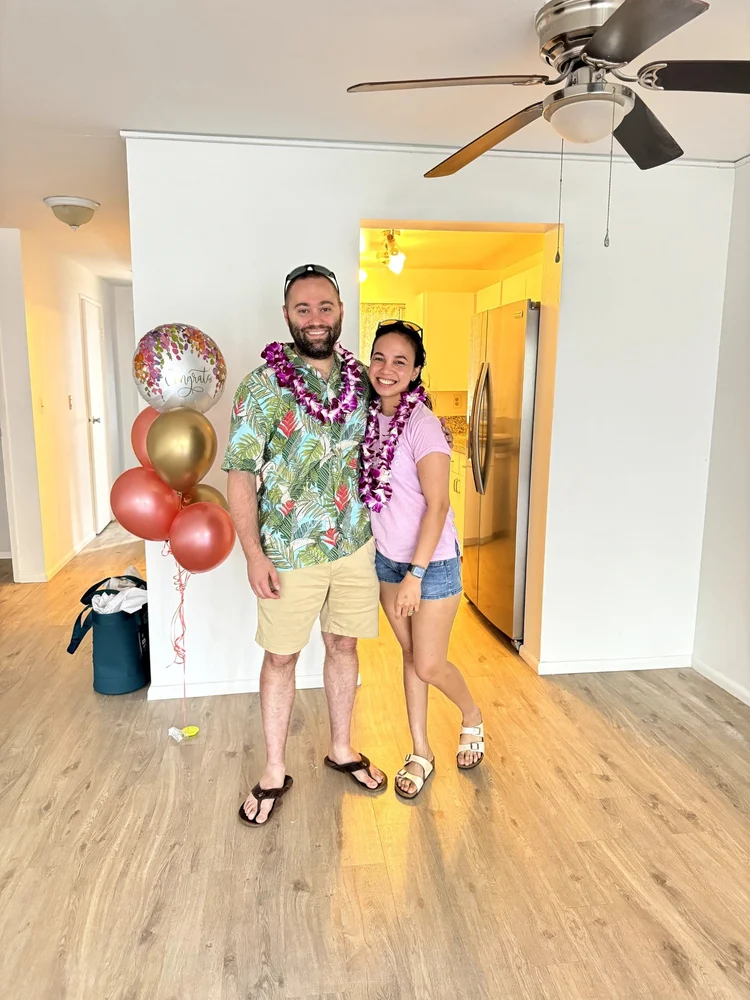
Tina was truly outstanding in helping my husband and I find a home after relocating to the island. We tend to be impatient and demanding clients, but she navigated our indecisions and changing needs with professionalism and patience. We went through multiple contracts, negotiations, and requests for repairs, yet Tina never wavered. Her attention to detail and commitment to getting us the best deal left us extremely happy with our final purchase. She went above and beyond in every aspect, and we now consider her a lifelong friend and a trusted advisor. I would highly recommend Tina to anyone in need of an exceptional real estate agent. Her dedication made all the difference.
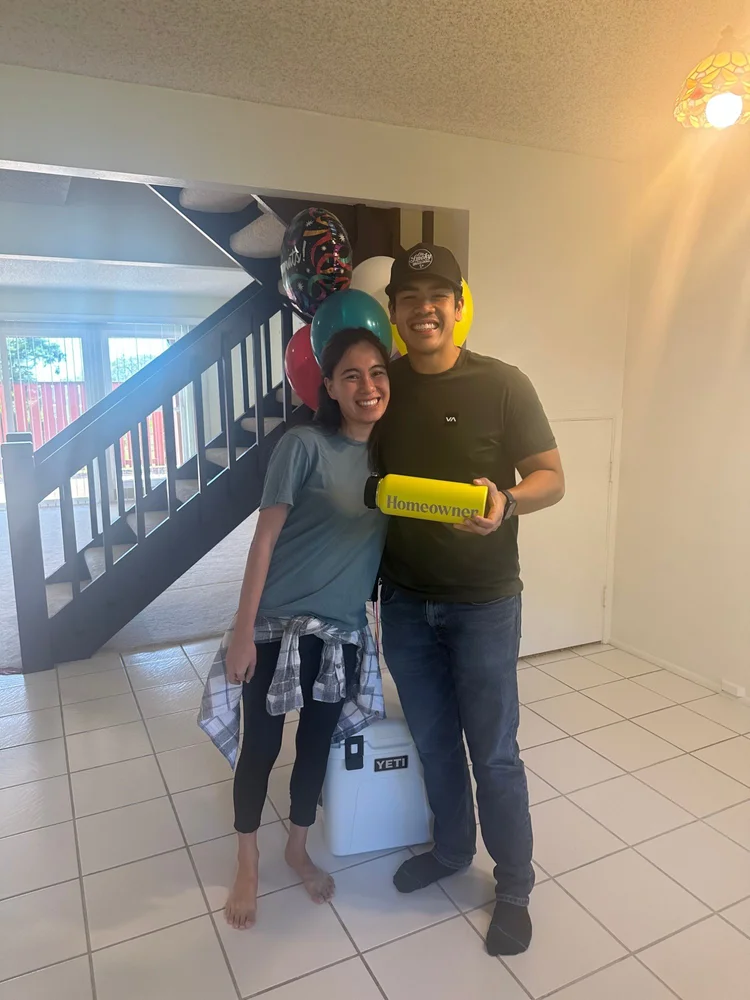
Tina helped us with finding our dream home! She was with us every step of the way!
Questions Buyers Ask About Mililani
What's the difference between Mililani Town, Mililani Mauka, Launani Valley, and Waipiʻo Acres / Waikalani / Melemanu?
Mililani Town is the earlier-developed side and holds most of the area's everyday shopping and services. Mililani Mauka sits across H-2 and developed later. Launani Valley is a separate valley with its own community association and different school assignments. Waipiʻo Acres / Waikalani / Melemanu is another nearby pocket that includes condo communities and Waipiʻo Acres homes outside MTA, and listings there may use the MLS label "Waipio Acres/Waikalani Woodlands." These areas sit close together, but their housing, access, associations, and school assignments do not all work the same way. That is why I look at the specific property instead of relying on the Mililani mailing address alone.
What types of homes can I find in Mililani?
Condos, townhomes, and single-family homes, with real variation in age, layout, lot size, and condition depending on where you are. One thing worth knowing early is that in Hawaiʻi a home can look like a standard single-family house and still be legally set up as a condominium. That affects what you own, what you maintain, and what you pay. I walk through the actual documents with you so there are no surprises after the offer.
What should I know about MTA and other association fees?
The Mililani Town Association covers Mililani Town and Mililani Mauka, and it collects a quarterly assessment and enforces design standards, so exterior work like roofing or paint can require approval. Depending on the property you may also have a separate condominium or project association on top of that, and those often bill on a different schedule, so it is worth knowing what hits monthly versus quarterly before you budget. Launani Valley is not part of MTA and has its own master association. Waipiʻo Acres / Waikalani / Melemanu is outside MTA as well. The condo projects there have property-specific association structures, so I check the documents for the specific home rather than assume one setup applies across the area. Because the structure changes property by property, I pull the current documents and figures for the specific home you are considering rather than giving you a number that may not apply to it.
How long is the commute from Mililani to major Oʻahu work and Military locations?
My experienced baseline ranges run about 8 to 15 minutes to Wheeler, Schofield, and NCTAMS; about 15 to 23 minutes to Pearl Harbor-Hickam, Tripler, Camp Smith, and Fort Shafter; and about 32 to 35 minutes to MCBH Kāneʻohe. Those are baseline numbers, not rush hour numbers. Two homes in Mililani can be ten minutes apart before either one reaches the highway, and the H-2 to H-1 merge can swing the town-bound routes dramatically on any given morning. If you are on island, drive your actual route at the hour you would actually leave.
What schools serve Mililani?
Mililani Town and Mililani Mauka addresses are assigned within the Mililani complex, which includes Mililani High, Mililani Middle, and five elementary schools. Launani Valley is assigned differently: Wheeler Elementary, Wheeler Middle, and Leilehua High in Wahiawā. For Waipiʻo Acres / Waikalani / Melemanu, check the specific address rather than assuming either set applies. Assignment is based on your specific street address, so verify it with the Department of Education for any home you are seriously considering.
What should I compare if I like Mililani but can't find the right home?
It depends on what is missing. If it is the home itself, Waipahu, Waikele, Pearl City, ʻAiea, ʻEwa Beach, and Kapolei are worth a look. If you want newer construction, Koa Ridge, Hoʻopili, and newer pockets of ʻEwa Beach and Kapolei make sense. If it is really a commute question, your work location may change the answer entirely. I would rather show you the alternatives than talk you into a Mililani home that does not fit.
Can Tina help me buy a Mililani home if I'm not currently on Oʻahu?
Yes, and a good number of my Buyers start exactly that way. I can walk a property for you on video, answer the questions you cannot answer from listing photos, and tell you what I am actually seeing rather than what the pictures suggest. I coordinate the transaction remotely from there, and where it applies we can close remotely too. The goal is that you never feel like you bought a home sight unseen, even if you technically did.




Think Mililani Might Fit Your Next Move?
Tina Marie Gamble, Epic Hawaiʻi Homes
- Licensed Since 2016
- 450+ Families Served
- Virtual Tours & Remote Closings
- From Client to Family, Not Just a Transaction
Tell me what you're thinking about, even if you're still early in the process. You don't need to have the neighborhood, property type, or even your timeline completely figured out before reaching out. Start with what you know, and I'll help you build the rest of the plan and make sense of your next step.


HAWAIʻI LICENSE RS-78939eXp REALTY