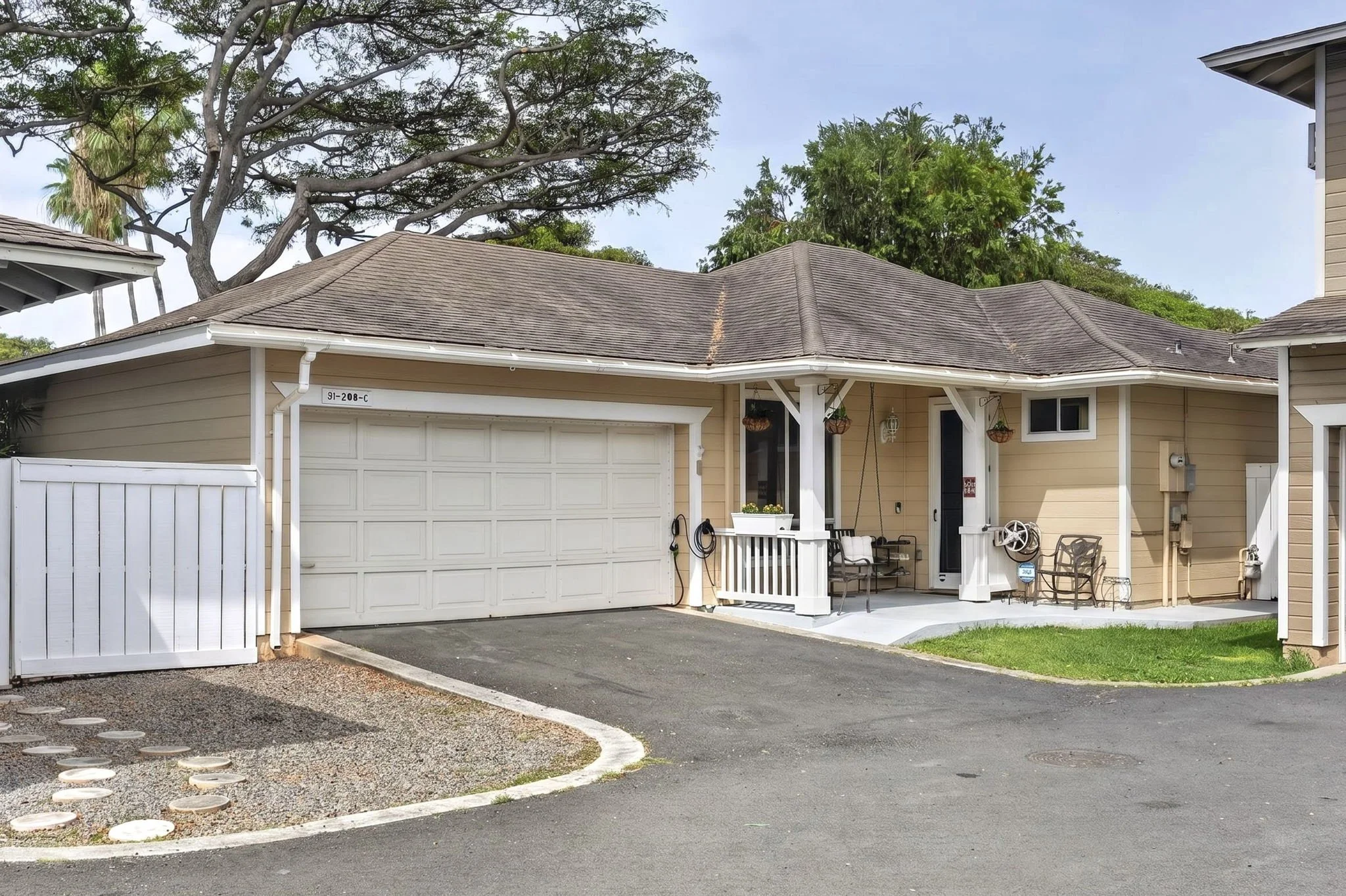
Hawaii requires every cesspool be upgraded, converted to a septic or aerobic treatment system, or connected to a sewer line before January 1, 2050, under HRS section 342D-72. Buying a home with a cesspool does not trigger an earlier deadline, but a new owner inherits full responsibility for the system and its conversion cost.
A Buyer walks through a home on a quiet cul-de-sac in Waimanalo, loves the lot, loves the price, and then sees one line in the Seller disclosure: wastewater system, cesspool. That single word changes the math on the purchase, and most Buyers have never had to think about it before.
Cesspools are common on O'ahu, especially in older neighborhoods built before modern sewer lines reached them. They are legal to own today. They are not legal to keep forever. Hawaii passed a statewide deadline years ago, and it applies no matter who owns the home or when they bought it.
This guide walks through what the law actually says, what can force a conversion earlier than 2050, what a new owner is on the hook for, and where the state's financial help for conversion currently stands.
What Hawaii's Cesspool Law Actually Requires
Under Hawaii Revised Statutes section 342D-72, every cesspool in the state must be upgraded or converted to a septic system or an aerobic treatment unit (ATU) system, or connected to a sewerage system, prior to January 1, 2050. There is no exception for a cesspool that is working fine and has never caused a problem. The deadline applies to the cesspool, not to any specific owner.
A cesspool, under the statute, is an excavation deeper than its widest surface dimension that receives untreated wastewater, retains the solids, and lets the liquid seep into the surrounding ground. A septic system filters wastewater through a tank and a drainage field before it reaches the soil. An ATU system actively treats the wastewater with an aeration device before discharge, under Department of Health rules for household aerobic units, according to the Hawaii Department of Health's wastewater program.
The Director of Health can exempt a property from the requirement if the owner applies and documents a legitimate reason that makes conversion infeasible. The statute lists small lot size, steep topography, poor soils, and accessibility issues as examples, but it does not guarantee an exemption to any property just because one of those conditions exists.
The 2050 Deadline, and Why It May Not Be the Only One
January 1, 2050 is the hard outer limit written into HRS 342D-72. As of this writing, that date has not moved. A 2025 bill, SB 542, would have pulled the deadline forward to 2035 for cesspools considered a greater risk to public health and the environment, but it did not pass, according to the Department of Health's own FAQ page. Buyers should not assume the 2050 date is permanent. Hawai'i's legislature revisits cesspool bills nearly every session, and a future session could change the timeline for some or all cesspools.
Earlier Triggers That Can Force a Conversion Sooner
The 2050 date is a ceiling, not a guarantee that a specific cesspool gets that long. Under Hawaii Administrative Rules section 11-62-06(m), a cesspool can be required to convert earlier when any of the following applies:
- A proposed building change, such as adding a bedroom, bathroom, or kitchen, would alter the quantity or nature of the wastewater the home produces.
- The cesspool has contributed to illness, a nuisance, an unsanitary condition, vectors, or odors.
- The cesspool has been pumped more than twice in the past 12 months.
- The cesspool has spilled more than once.
- The cesspool discharges directly into the groundwater table.
A Buyer planning a renovation that adds bedrooms or bathrooms should ask early whether the permit will require the cesspool to convert as part of that project. This is a question for the Department of Health and a licensed wastewater engineer, not a guess made at the kitchen table.
What Happens to a Cesspool When a Home Changes Hands
This is the part Buyers most often get wrong. The statute itself does not list a sale or transfer of ownership as a trigger for conversion. Closing on a home with a cesspool does not, by itself, start a clock.
What does happen is simpler and more important: the new owner becomes responsible for that cesspool going forward, including the cost of converting it before 2050 or sooner if one of the triggers above applies. The Department of Health's guidance is direct about this. A Buyer is not inheriting someone else's problem that will be solved before they take title. They are inheriting the obligation itself.
Tina Marie Gamble, a top producing O'ahu Realtor who has helped more than 450 Families buy and sell on O'ahu, recommends that Buyers request the Seller's cesspool pumping records and any prior Department of Health correspondence as part of the home inspection and due diligence period, rather than relying on a general disclosure statement alone.
Large Capacity Cesspools: A Different Set of Rules
A large capacity cesspool, or LCC, is treated differently than the cesspool under a typical single-family home. The Department of Health defines an LCC as a cesspool that serves either multiple residential dwellings, a single-family home plus other wastewater-producing structures, a non-residential building with capacity for 20 or more people a day, or a single-family home that also operates a business such as a salon, childcare center, or pet grooming service.
If a property a Buyer is considering fits one of these descriptions, confirm with the Seller and, ideally, directly with the Department of Health, whether the cesspool has been classified as an LCC and what compliance status it currently holds. LCCs can carry different timelines and documentation requirements than a standard residential cesspool.
What a Conversion Actually Costs, and Who Pays For It
| Conversion option | What it involves | Typical consideration |
|---|---|---|
| Septic system | Tank, piping, and a drainage field that lets soil filter wastewater naturally | Needs enough lot size and suitable soil |
| Aerobic treatment unit (ATU) | Tank, aeration device, and a discharge method meeting DOH rules | Requires a certified operator and an active service contract |
| Sewer connection | Hookup to an existing municipal sewer line | Only available where a line already reaches the property |
| Exemption request | Application to the Director of Health citing a legitimate barrier | Not guaranteed; must be documented and approved |
| Do nothing before 2050 | Leaving a cesspool unconverted past the deadline | Exposes the owner to penalties under HRS Chapter 342D |
The Department of Health does not publish a single statewide cost figure for conversion, because lot size, soil conditions, and the chosen system all change the number. The agency's own guidance says the bulk of the expense is materials and construction, with the remainder going to engineering, and recommends getting quotes from a licensed wastewater engineer and a licensed contractor rather than estimating from a neighbor's project. Confirm your own number with a wastewater engineer before you factor conversion cost into an offer.
The Tax Credit That Expired, and Where That Stands Now
Hawaii once offered a state income tax credit under HRS section 235-16.5 covering qualified cesspool upgrade, conversion, or sewer connection expenses, up to $10,000 per qualified cesspool, with total credits statewide capped at $5,000,000 in a given tax year. That credit expired for taxable years beginning after December 31, 2020, under the statute's own sunset provision.
Lawmakers have tried more than once to bring it back. Senate Bill 2540 in the 2024 legislative session proposed reinstating the credit retroactively to December 31, 2020, but the bill died in committee and did not become law. As of this writing, there is no active state income tax credit specifically for cesspool conversion. Buyers and owners should check current programs directly with the Hawaii Department of Health's wastewater branch and with a tax professional before assuming any credit applies, since legislation in this area changes from session to session.
Penalties for Staying Non-Compliant
Violations of Hawaii's water pollution law, HRS Chapter 342D, can carry fines of up to $60,000 per separate offense, and each day a violation continues counts as its own separate offense. That structure can turn a small compliance gap into a large liability quickly if it goes unaddressed, which is one more reason to know a cesspool's status before closing rather than after.
What To Do If You Are Buying a Home With a Cesspool
Ask the Seller for pumping records for at least the past 12 months, since a cesspool pumped more than twice in that window can already be subject to an earlier conversion trigger. Ask whether the Department of Health has ever contacted the owner about the system. If the home could fit the definition of a large capacity cesspool, ask directly whether it has been classified as one. If a renovation is part of the plan, find out before closing whether that renovation would require conversion as a condition of the permit. Each of these questions belongs in the inspection period, while the Real Estate Contingencies in your contract still give you room to investigate. None of these are deal breakers by themselves. They are information a Buyer needs to make an informed decision and to budget correctly for a cost that is coming due no later than 2050.
Ready to Talk Through a Property With a Cesspool or Any Other Hawaii Property Question
Every property on O'ahu comes with its own list of things worth checking before an offer goes in, and a cesspool is one of the more consequential ones. If you are starting to look at homes and want someone who will flag this kind of detail before you fall in love with a listing, or if you are already under contract and have questions about a disclosure you just received, reach out to Tina's team. Call or text 808-748-1171, or email Team@EpicHawaiiHomes.com, and describe where you are in the process.
Frequently Asked Questions
Does every home in Hawaii have to convert its cesspool by a certain date?
Yes. Under HRS section 342D-72, every cesspool in the state must be upgraded, converted to a septic or ATU system, or connected to a sewer line before January 1, 2050, unless the Director of Health has granted a specific exemption.
Will I have to replace a cesspool immediately after Buying a home with one?
Not automatically. The statute does not list a sale as a trigger for conversion. The new owner simply becomes responsible for converting it by the 2050 deadline, or sooner if one of the earlier triggers under HAR 11-62-06(m) applies.
What triggers an earlier cesspool conversion deadline before 2050?
A building change that alters the wastewater the home produces, a cesspool that has caused illness or nuisance conditions, a cesspool pumped more than twice in 12 months, a cesspool that has spilled, or one that discharges directly into the groundwater table can all trigger earlier conversion under state rules.
Is there still a tax credit available for converting a cesspool in Hawaii?
Not currently. The prior credit under HRS 235-16.5, worth up to $10,000 per qualified cesspool, expired for tax years after 2020. A 2024 bill to reinstate it died in committee. Confirm the latest status with a tax professional before counting on it.
What is a large capacity cesspool, and does my home have one?
A large capacity cesspool, or LCC, serves multiple dwellings, a home plus other wastewater-producing structures, a building with capacity for 20 or more people daily, or a home that also runs a qualifying business. Ask the Seller and the Department of Health directly if a property might fit this category.
Who do I call to find out if a home's cesspool is compliant?
Start with the Hawaii Department of Health's wastewater branch for the property's official record, and hire a licensed wastewater engineer for an independent assessment of the system's current condition and any work it may need.